


The Scoop
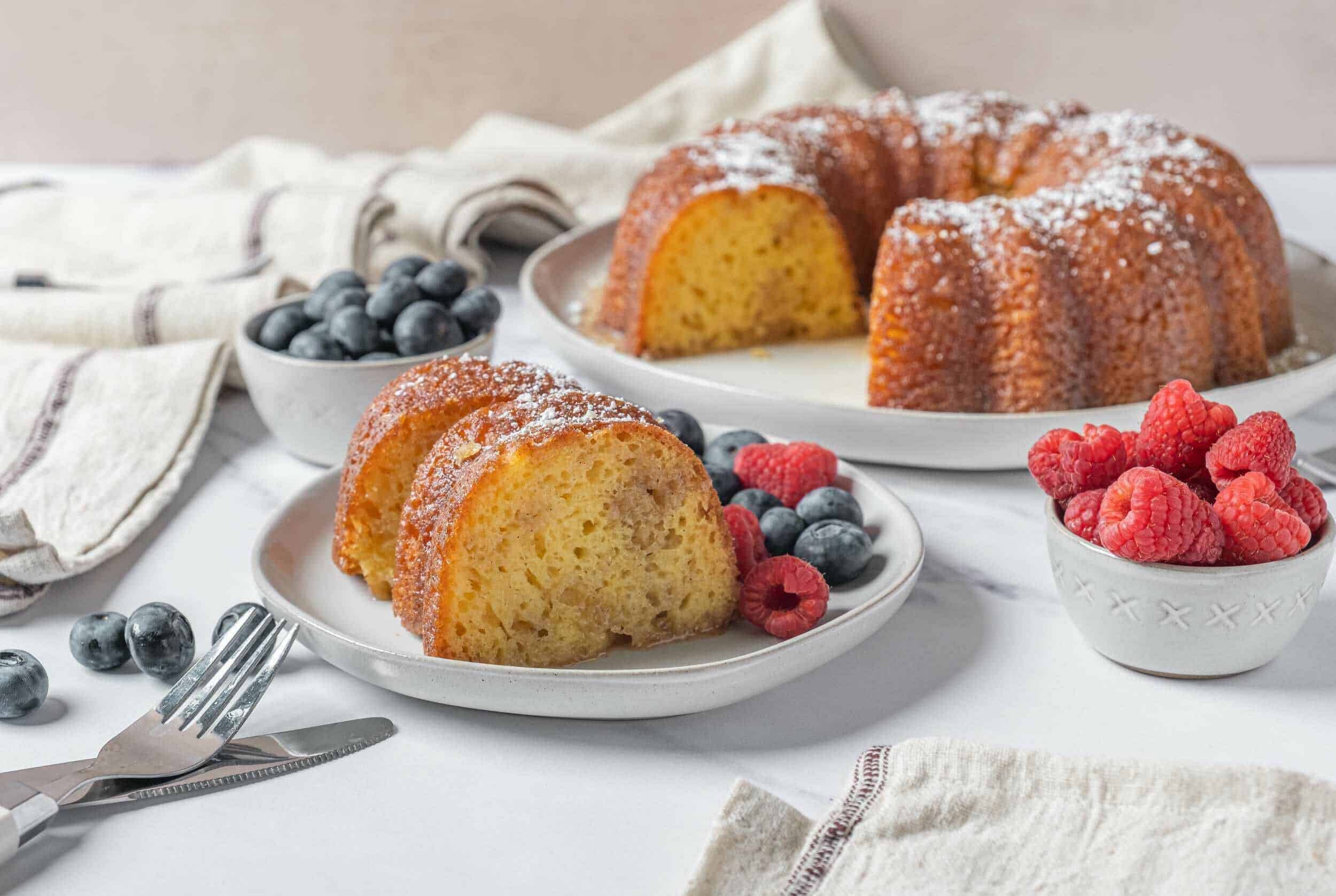
Rich, buttery, and soaked with a warm vanilla glaze, this classic Bundt cake is the kind of dessert that makes any celebration feel a little more special.
The tender crumb, sweet buttery sauce, and hint of cinnamon come together into a cake that only gets better as it rests and absorbs every last drop of that glaze.
Ingredients
For the cake:
- 3 cups all-purpose flour
- 1 teaspoon salt
- 1 teaspoon baking powder
- 1/2 teaspoon baking soda
- 1 cup buttermilk
- 1 tablespoon vanilla extract
- 24 tablespoons unsalted butter, softened to room temperature
- 2 cups granulated sugar
- 5 large eggs, at room temperature
For the butter sauce and glaze:
- 1 cup granulated sugar
- 1/4 cup water
- 1/2 cup unsalted butter
- 1/8 teaspoon salt
- 1 1/2 teaspoons vanilla extract
- 1/2 teaspoon cinnamon, optional
Directions
- Preheat the oven to 325 degrees F.
- Generously and thoroughly grease and flour a 10-inch Bundt pan.
- In a medium bowl, whisk together the flour, 1 teaspoon of salt, the baking powder, and the baking soda.
- In a separate bowl, whisk together the buttermilk and 1 tablespoon of vanilla.
- In the bowl of a stand mixer fitted with the paddle attachment, add 24 tablespoons of butter and 2 cups of sugar.
- Beat the butter and the sugar on medium-high speed, scraping down the sides occasionally, until light and fluffy, about 3-4 minutes.
- Reduce the mixing speed to medium.
- Add the eggs, one at a time, beating just until the yellow of the egg disappears after each egg.
- Reduce the speed to low and gradually add the flour mixture to the butter mixture in thirds, alternating it with thirds of the buttermilk mixture.
- Beat until just combined, giving the mixture a final stir by hand to incorporate any flour that may be stuck on the bottom. Be careful not to overmix.
- Transfer the batter to the prepared Bundt pan. Tap the pan on the counter a few times to release any air bubbles.
- Bake the cake until a wooden toothpick inserted into the center comes out with only a few moist crumbs sticking to it, about 50-60 minutes.
- Transfer the cake onto a wire rack to cool for at least 5 minutes.
- Poke holes all over the cake, poking about 3/4 of the way through using a chopstick.
- Immediately after poking the holes in the cake, add the remaining sugar, water, remaining butter, and remaining salt to a medium saucepan.
- Heat the mixture on low until the butter is melted, stirring occasionally, without letting the mixture boil.
- Once the butter is melted, stir in the remaining vanilla and the cinnamon.
- Reserve 1/4 cup of the glaze mixture. Spoon the rest of the glaze onto the cake, doing so slowly so the sauce can soak into the holes.
- Let the cake cool for 30 minutes.
- Run a knife around the edges of the cake and invert it onto a plate or cake stand.
- Once the cake has cooled completely, rewarm the reserved 1/4 cup of glaze without letting it boil.
- Brush the warmed glaze evenly over the cake, moving slowly so it has time to absorb.
- Let the cake sit for at least 1 hour before serving. The longer the cake rests and absorbs, the better the flavor.
- Serve.
×